bla fills software releases with decoys for AI agents
bla is a release protection tool for software authors. It adds decoy code and data designed to make AI reverse engineering more expensive.
- Verdict
- Verdict: Wait
- Tested
- Commit
53b8aae- Source
- qybaihe/bla
- Author
- Kahtaf Alam

Shipping an app gives other people a working copy to inspect. AI agents make that inspection easier, and bla adds decoy code and data to the files you distribute. It aims to make an AI agent spend its attention on the wrong things while the application keeps working.
bla is built mainly to slow down rea, a toolkit that lets coding agents inspect programs and binaries.
Tested: commit
53b8aae3546784c674cd4646dae3a0747704d1fbon November 14, 2026, on Linux arm64. Workflow: harden a browser quote calculator and a Node data-import tool, check behavior, then have an agent rebuild the protected tool. Result: bla kept the import tool working, and an agent using rea still rebuilt it. bla mistook the calculator’s shipping weights for a secret-key check and left its JavaScript out of the output. Verdict: wait on bla for routine production release hardening.
Set up bla with your coding agent
To try bla’s command-line tool, bla-agents, on a disposable copy, paste this into your coding agent:
Install the latest bla-agents from https://github.com/qybaihe/bla and run bla-agents harden on a disposable copy of this project's release build.
Compare the result with the original using the project's tests.
Report refused files and keep the original release available.
bla makes JavaScript much larger, and an agent using rea still rebuilt the tool
Timo Zhang maintains the MIT-licensed project and ships frequent releases. The CLI workflow finds build files and writes transformed copies into .bla-hardened. bla defaults to its most aggressive preset, bankrupt.
On a Node command-line tool, the protected files worked the same as the original. The default preset makes JavaScript larger:
| Node tool’s JavaScript file | Size |
|---|---|
| Original production build | 12.1 kB |
With bla’s default preset (bankrupt) |
417 kB |
Claude Code, a coding agent using rea, still rebuilt a working copy of the Node tool from a release protected with bla’s default preset. The decoys did not stop it.
Earlier reports show why finished releases need testing
A Windows developer reported that bla initially had little effect on automated analysis. After bla’s Windows protection was updated, the developer reported higher token use (more text processed by the AI). Their analysis also shows an AI agent identifying misleading strings as decoys.
A Linux-library report found that an older version appended data that could be removed by cutting the file back to its original length. Zhang acknowledged the problem and described a fix that puts added content inside the compiled library’s loadable structure. With the current version, cutting a protected Linux library back to its original size leaves a file that no longer loads, so cutting off the added data no longer yields a working library.
An earlier JavaScript report showed broken eval (executing code stored in a string), failures when an application used Math (JavaScript’s name for math functions) for its own data, and changed function names. The report also showed bla’s built-in verifier saying code still worked when it crashed. In the current version, eval, Math and function names survive protection. The verifier checks code structure; use the application’s own tests to check behavior.
bla can reject ordinary shipping data
bla refuses code that appears to check a secret key one piece at a time: an agent can solve those pieces separately. bla mistook a quote calculator’s shipping weights for such a check. The diagnostic included:
{
  "id": "per-lane-byte-compare-array",
  "severity": "error",
  "evidence": "[140,80,360,0,1100]"
}
The detector looks for a numeric array and words such as input or key in the scanned text. The stealth, balanced, maximum and bankrupt presets all refused the calculator’s JavaScript.
bla still writes the page, so the release looks complete but cannot calculate a quote. Treat any refused file as a failed release: keep the original build and check that the finished application’s main workflow works before distributing it.
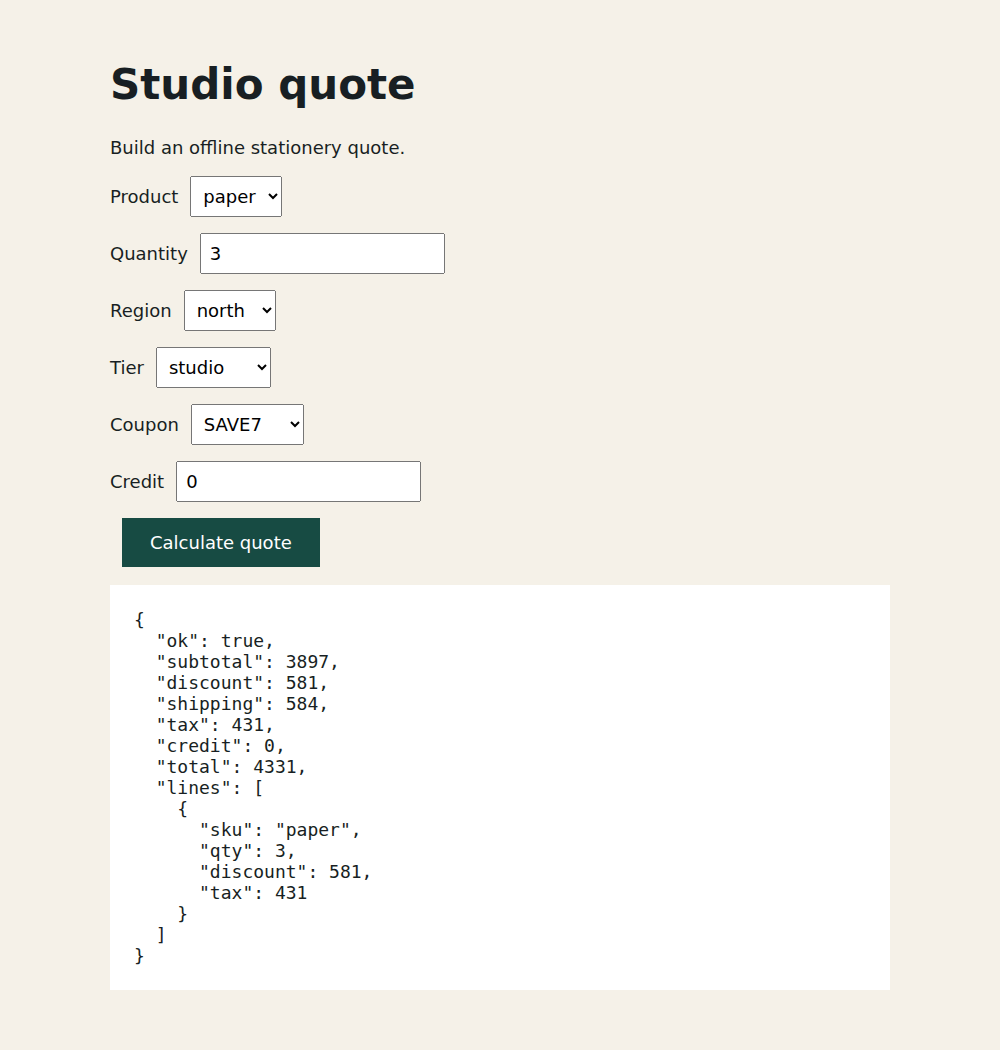
The original browser calculator returns a $43.31 quote.
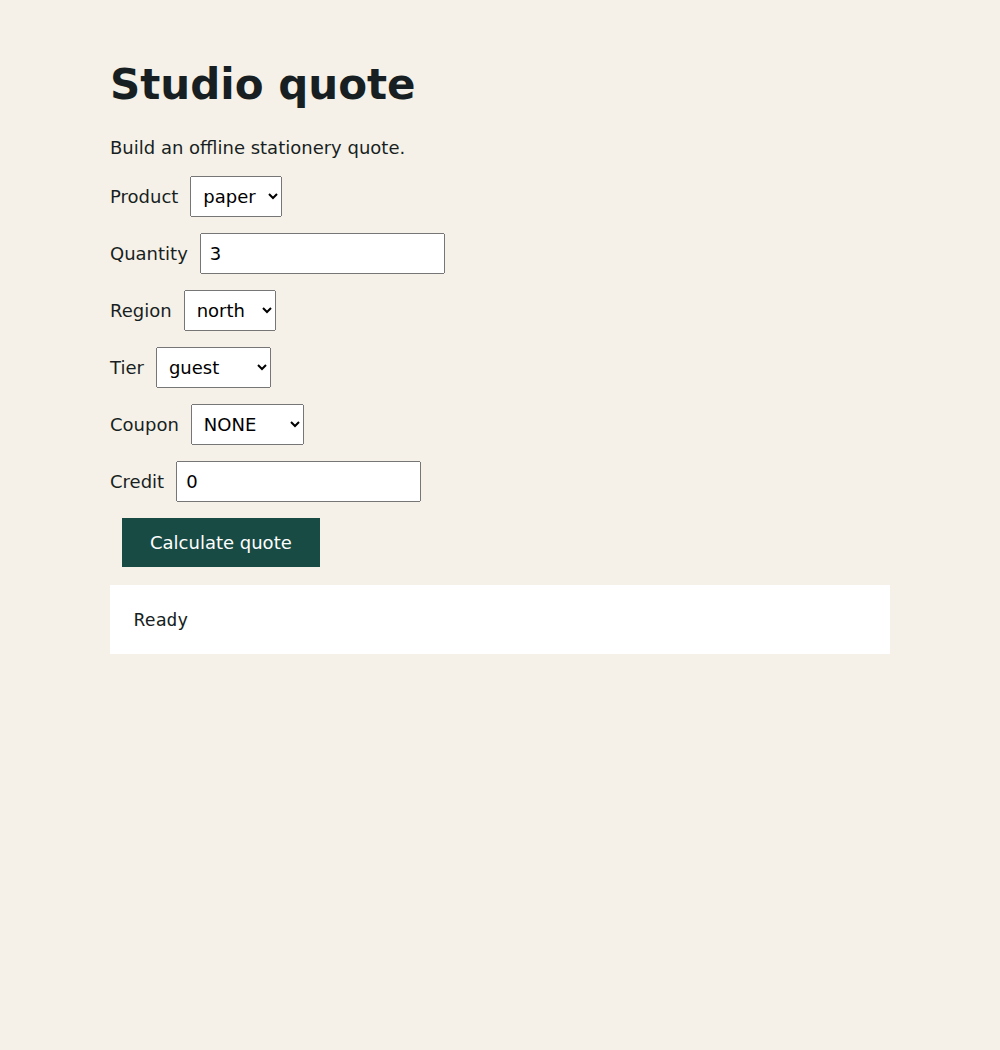
bla writes the page but refuses its JavaScript, leaving the form unable to calculate.
Self-seal breaks protected JavaScript after later edits
Self-seal is an extra setting that checks whether the protected code has changed. With self-seal on, adding one comment to a protected entry file caused its integrity check to fail. Rebundling the output with esbuild, a JavaScript build tool, triggered the same failure. Without self-seal, rebundled output at the bankrupt preset kept working.
Finish bundling first, apply bla afterwards, and test exactly the files you will distribute.
Keep your existing production build
Wait on bla for routine production release hardening when you need a dependable path from build files to a working app. Its detector can reject ordinary application data and leave an incomplete release, and its default preset did not stop an agent using rea from rebuilding a protected tool. For online products, keeping valuable logic on your server reduces what there is to inspect. bla suits controlled experiments where you can inspect refusals and test the final files.